Around the Clock Water Damage Restoration in Wood Wind Landing
When water is spreading across a floor in Wood Wind Landing, Wood Wind Landing Water Restoration dispatches fast, around the clock emergency response to extract, dry, and contain the damage before it gets worse. IICRC certified technicians handle every phase from initial mitigation through full reconstruction, and we coordinate directly with your insurance carrier.
If nobody picks up, we're likely helping another homeowner, and we'll call you back within 15 minutes.


When water hits a Wood Wind Landing home, Wood Wind Landing Water Restoration responds: 24/7 emergency water damage restoration, IICRC certified drying, sewage and storm cleanup, and the documentation that keeps insurance claims moving. Call (765) 978-5086 for immediate help.
- Services: water damage restoration, basement flooding, sewage cleanup, storm damage
- Service area: Wood Wind Landing, Hamilton County, IN and surrounding areas
- Response time: Same day for Wood Wind Landing inquiries; 24/7 emergency service available
- Licensed and insured (License #RC21100059)
- Serving Wood Wind Landing, IN since 2018
Schedule Your Free Damage Assessment
A proper inspection in a Wood Wind Landing home is room by room, not a quick walk through. We measure walls with non penetrating meters at multiple heights, check baseboards and trim, pull insulation in suspect cavities, and inspect subfloors, behind cabinets and appliances, under sinks, around water heaters and washing machines, and along basement perimeter and slab joints. The tools are specific: thermal imaging cameras to map hidden moisture behind finished surfaces, penetrating moisture meters to confirm readings in framing and subfloor, and a hygrometer to log ambient temperature and relative humidity. Thorough moisture mapping is what prevents the most expensive problem in water restoration, which is hidden moisture that surfaces 30 days later as mold growth in a wall cavity nobody opened. Wood Wind Landing homeowners pay for finish work, and a missed wet stud bay undoes all of it.
I agree to be contacted by Wood Wind Landing Water Restoration regarding my inquiry.
Ceiling water damage in Wood Wind Landing means the problem is upstairs and moving. Roof leaks, overflowed tubs, and failed supply lines travel through framing before they show below. Finding and stopping the source, then drying the cavity properly, is what separates repair from repeat.
Mold prevention is a deadline, not a product. Given warmth and moisture, growth begins within days. Fast water extraction, aggressive drying, and antimicrobial application inside that window is how Wood Wind Landing restoration keeps a water claim from becoming a mold remediation project.
Every job here closes the same way: verified dry, documented completely, cleaned up, and walked through together. Wood Wind Landing homeowners keep the moisture logs, the photos, and a direct number that still answers after the equipment leaves.
Payment Options That Work for You
Your Wood Wind Landing Water Restoration project lead will walk you through every financing option during the assessment, and every term is in writing.
Pay for your project at a later time, but lock in today's pricing. Ideal for homeowners waiting on insurance settlements.
- No payments for 12 months
- No interest if paid in full
- Lock in current pricing today
Divide your project cost equally across 12 months with zero interest. Most homeowners choose this option for predictable budgeting.
- Equal monthly payments
- 0% interest for 12 months
- Simple, predictable budgeting
Spread your investment over up to 20 years with fixed equal payments. The right choice for larger projects or homeowners who prefer lower monthly amounts.
- Up to 20-year terms available
- Fixed equal payments
- Ideal for larger restoration projects
Subject to credit approval. Ask your project lead for current terms and promotions.
Wood Wind Landing Properties, Start to Finish
Wood Wind Landing Water Restoration covers a water loss from the first hour of extraction through the rebuild, with readings logged along the way.
Water Damage Restoration in Wood Wind Landing
Serving Wood Wind Landing: full scope water damage restoration for residential losses, from initial moisture assessment and extraction through structural drying, antimicrobial treatment, and reconstruction. IICRC S500 protocol on every job.
Learn moreBasement Flooding in Wood Wind Landing
For Wood Wind Landing addresses, basement flood response including water extraction, finished basement drying, content evaluation, and reconstruction of drywall, flooring, and trim affected by the loss. Common after sump pump failures and heavy spring rain.
Learn moreSewage Cleanup in Wood Wind Landing
Serving Wood Wind Landing: category 3 sewage cleanup with full containment, PPE protocol, contaminated material removal, antimicrobial application, and post remediation verification. Handled per IICRC S500 with S520 mold protocol when applicable.
Learn moreStorm Damage in Wood Wind Landing
In Wood Wind Landing, storm driven water intrusion response, including extraction, drying, and reconstruction of ceilings, walls, and flooring affected by wind driven rain, hail, or storm related water penetration through compromised building envelopes.
Learn moreCommercial Water Restoration in Wood Wind Landing
For Wood Wind Landing addresses, commercial water damage restoration for offices, retail, and multi tenant properties, including after hours response, large loss extraction capacity, and reconstruction coordinated around business operations.
Learn moreCommercial Flood Damage Cleanup in Wood Wind Landing
For Wood Wind Landing addresses, commercial flood response with high capacity extraction, commercial dehumidification, content pack out, and full structural drying sized to the building footprint and use class.
Learn moreCommercial Sewage Cleanup in Wood Wind Landing
Serving Wood Wind Landing: commercial sewage and Category 3 water response with containment, contaminated material disposal, antimicrobial treatment, and reconstruction. IICRC S500 protocol with S520 standards where mold remediation is required.
Learn moreCommercial Mold Remediation in Wood Wind Landing
For Wood Wind Landing addresses, commercial mold remediation per IICRC S520, including containment, HEPA filtration, contaminated material removal, antimicrobial application, and air sampling verification when warranted.
Learn moreCommercial Storm Damage in Wood Wind Landing
In Wood Wind Landing, commercial storm damage water restoration covering extraction, drying, mold prevention, and reconstruction of affected building systems after storm driven intrusion.
Learn more
Local Expertise, Real Results
Trust in Wood Wind Landing is earned with moisture meter readings, documented dry standard, and finish work that matches the original build.
A flooded basement at midnight in Wood Wind Landing is not a problem that improves with time. Wood Wind Landing Water Restoration typically dispatches a licensed crew Within 2 hours of your call on active water emergencies, with the crew letting you know on the call if the dispatch will take longer, day or night, with the extraction equipment and IICRC training to assess the loss and start mitigation. License #RC21100059.
Wood Wind Landing Water Restoration serves Wood Wind Landing and the surrounding Hamilton County communities with full scope residential and commercial water damage restoration. Our service area covers Wood Wind Landing, Westfield, Carmel, Noblesville, Fishers, Zionsville, Cicero, and Sheridan, with crews dispatched any hour to active water emergencies. The company has built its reputation on restoration work done correctly the first time, which matters in a market where homeowners expect the finish quality to match the original build. Our field crews are IICRC certified, licensed, and insured, and we approach every Wood Wind Landing call the same way: assess first, document everything, then mitigate. That methodical front end is what keeps a small loss from turning into a six figure rebuild.
Every water damage job we run in Wood Wind Landing follows the IICRC S500 standard for water damage restoration, and any mold remediation work follows IICRC S520. The process begins with a moisture assessment using thermal imaging and penetrating meters to map where water has migrated, often well past the visible wet area. Controlled extraction comes next, followed by structural drying with air movers and dehumidifiers sized to the affected square footage and monitored daily. When contamination is present, antimicrobial application is part of the protocol, and post drying verification confirms materials have returned to dry standard before any reconstruction begins. This sequence is not optional, it is the only way to dry a structure without leaving hidden moisture behind.
Our Promise
We make three commitments to every Wood Wind Landing homeowner who calls. First, fast emergency response, dispatched day or night, because every hour without extraction expands the damage. Second, IICRC certified technicians trained to the S500 standard handle the assessment, extraction, drying, and any mold work, with the appropriate equipment on the truck when they arrive. Third, a free on site inspection before any work begins, and if you have an active claim, we coordinate with your insurance carrier and document the loss to the standard adjusters expect.
Why It Matters Who Answers the Wood Wind Landing Phone
Restoration done to the IICRC S500 standard, documented start to finish, with a free inspection before any work begins in Wood Wind Landing and clear scope before the first invoice.
Around the Clock Emergency Dispatch
Water damage in Wood Wind Landing does not wait for business hours, and neither do we. Our 24/7 emergency line connects you to fast dispatch with extraction equipment, dehumidifiers, and air movers already on the truck. A certified technician leads the crew on arrival, which means assessment starts the moment we walk in.
IICRC S500 Certified Crews
Every restoration job follows the IICRC S500 standard, the governing protocol for water damage work. In practice, that means Category classification before drying starts, documented meter readings, and verified dry standard before reconstruction. Wood Wind Landing homeowners get the same protocol an adjuster expects to see in the file.
Mitigation Through Reconstruction
Most companies dry the structure and then hand the rebuild to a separate general contractor, which leaves the home sitting in demolition between phases. We handle drywall, flooring, paint, and trim under the same project, so the finish work matches the original build quality Wood Wind Landing homeowners expect.
Insurance Coordination Built In
We document the loss with photos, video, and a written moisture map before any mitigation begins, and we work directly with your insurance carrier to align scope with coverage. That paperwork is what keeps claims moving and prevents surprise denials. You handle the deductible, we handle the documentation.
Real Jobs. Real Results.
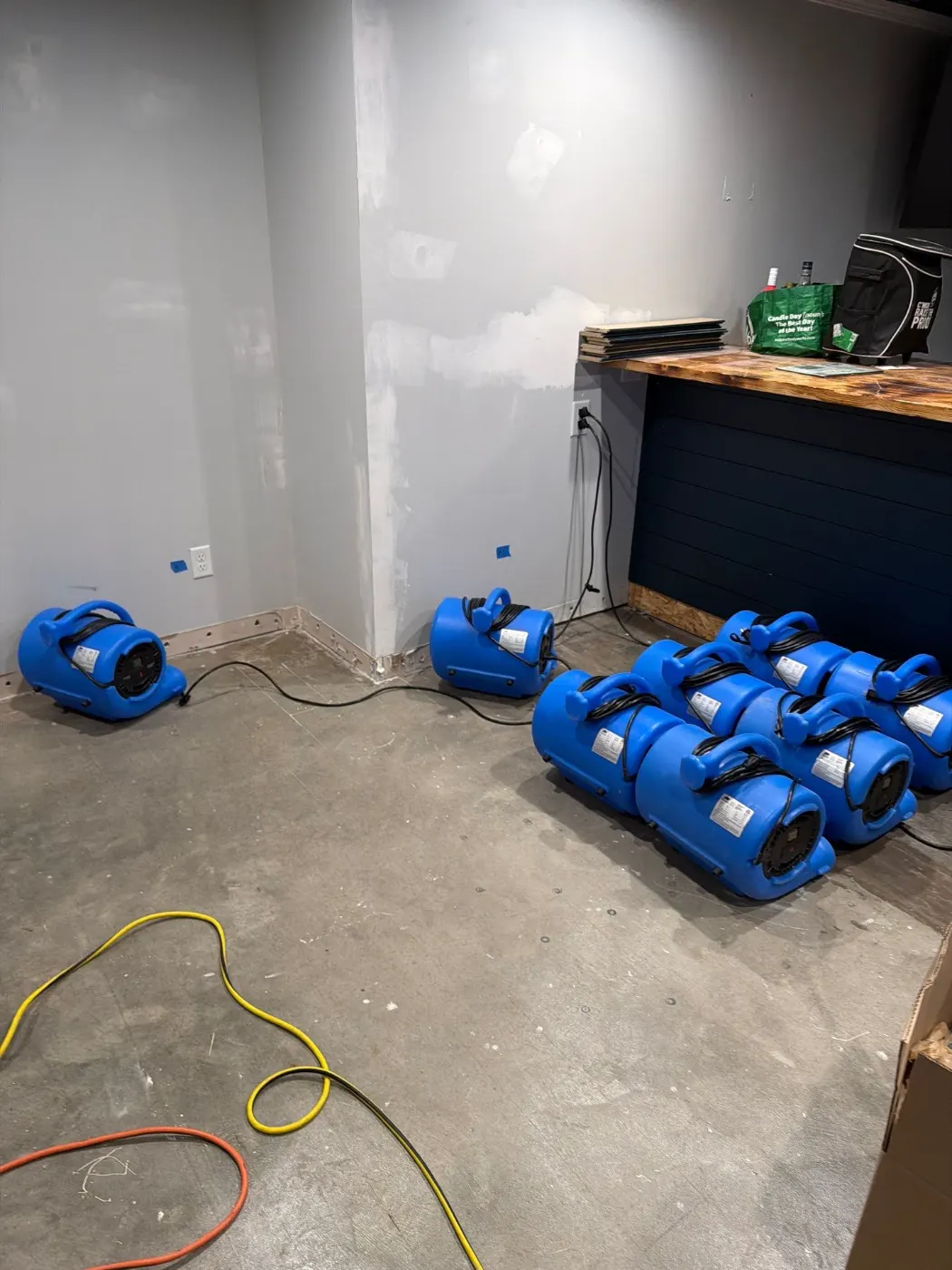
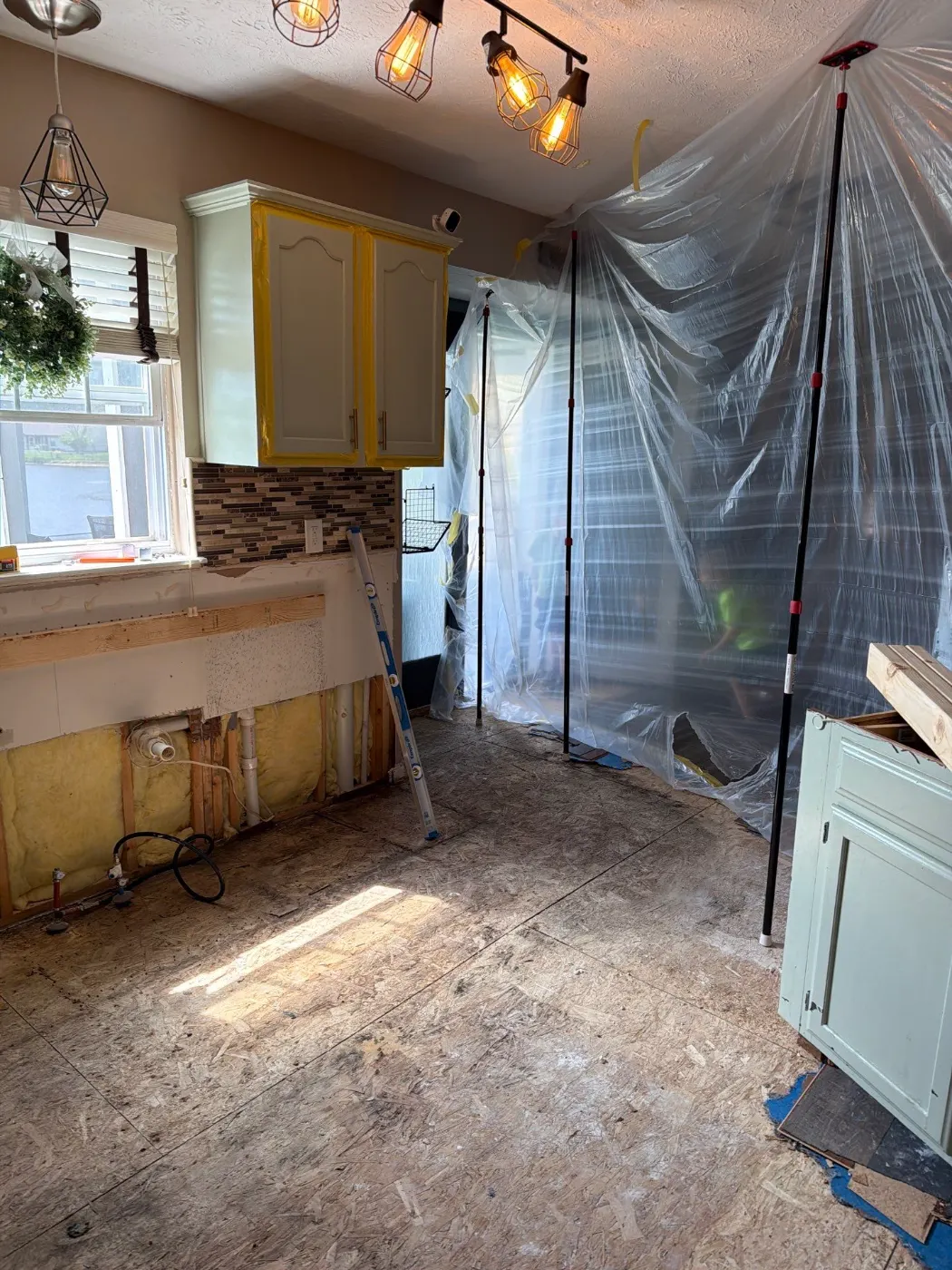
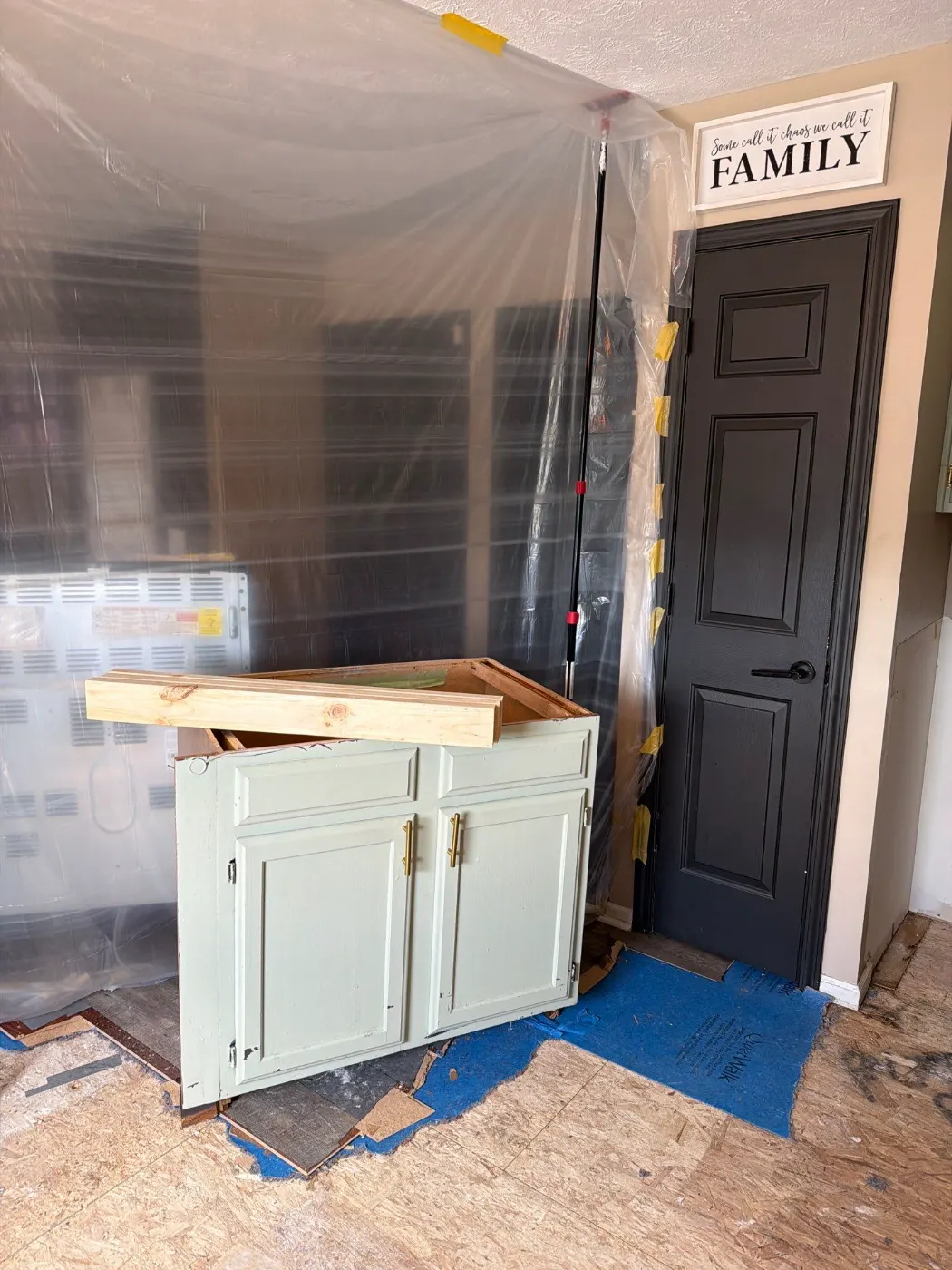
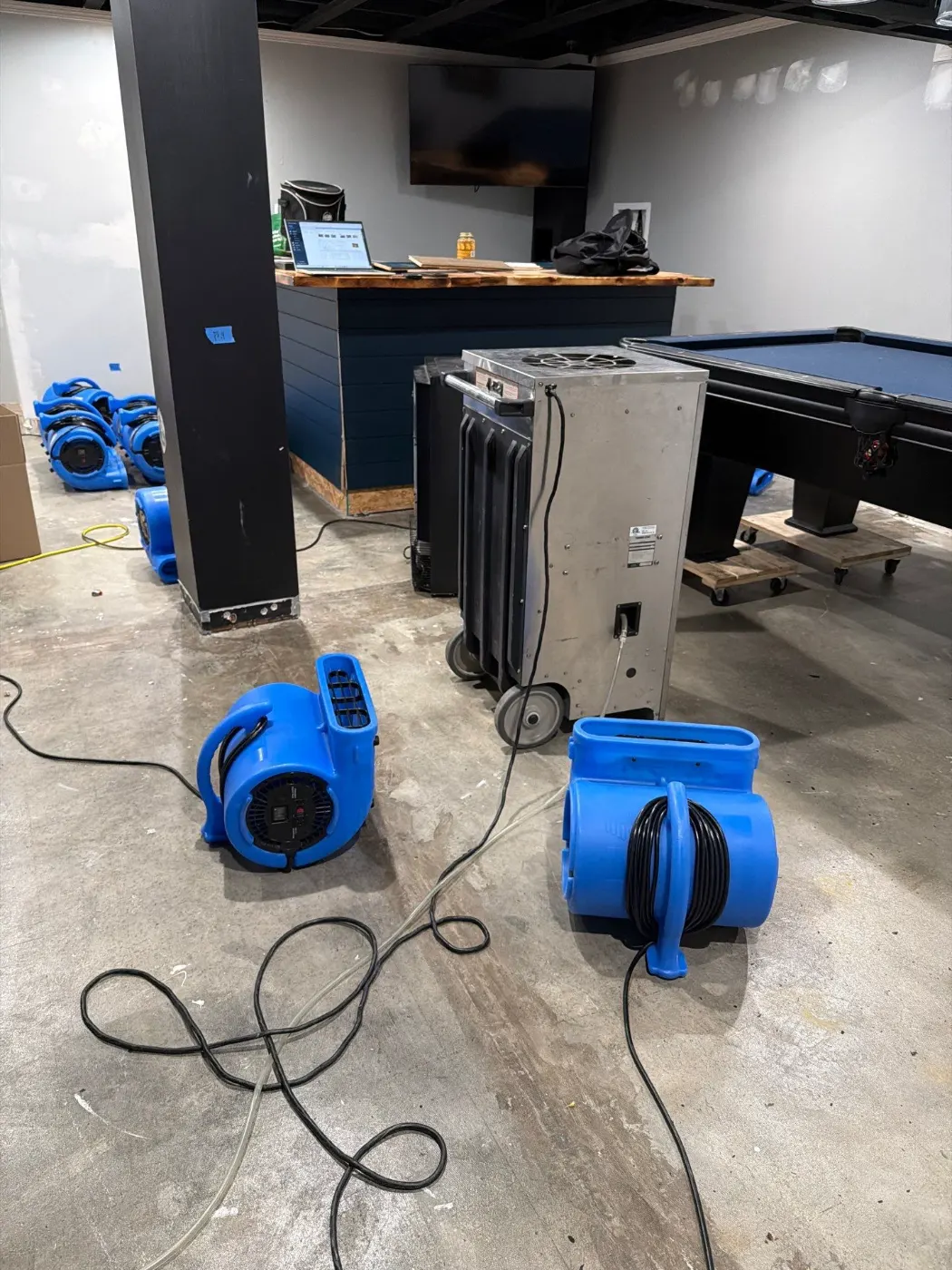
Documented restoration work from homes across Wood Wind Landing, Westfield, and Hamilton County, showing the standard of finish and the scope of what proper mitigation through reconstruction looks like.
The Wood Wind Landing Water Restoration Process
The first phase on any Wood Wind Landing call is on site moisture assessment and source identification. A certified technician walks the affected areas with thermal imaging and meters, locates the source (broken supply line, dishwasher or washing machine failure, sewage backup, or storm driven intrusion), and classifies the water as Category 1, 2, or 3 per IICRC S500. The full scope of damage gets mapped on paper before any drying equipment goes in, because dropping air movers on a wet floor without knowing where water has migrated wastes time and misses cavities. This phase typically takes one to two hours.
Phase two is insurance coordination and documentation. We photograph and video every affected area before mitigation begins, log moisture meter readings on a written map, and contact your insurance carrier's adjuster directly to align scope with coverage. Mitigation justification is documented to industry standard, which is what adjusters look for when approving the file. Most Wood Wind Landing homeowners never have to assemble this paperwork themselves, we send it to the carrier as part of the claim. Your job is the deductible and the move back in date.
Phase three is execution: drying and controlled reconstruction. Air movers and dehumidifiers are placed per structural drying calculations and monitored daily, with readings logged until moisture content in affected materials matches unaffected materials on the same structure. Controlled demolition happens only where materials cannot be dried in place, and then reconstruction begins, drywall, insulation, flooring, paint, and trim, completed to match the original Wood Wind Landing finish standard. Daily updates keep you on the timeline. The job is not done until materials hit dry standard and the rebuild matches what was there before the loss.
Rapid Emergency Dispatch
Call comes in, crew rolls with extraction equipment, dehumidifiers, air movers, and thermal imaging on the truck. An IICRC certified technician leads the response so assessment begins on arrival. No waiting for a second visit to start mitigation.
Category Determination per S500
Water is classified as Category 1 (clean supply line), Category 2 (gray water from appliances or toilet overflow), or Category 3 (sewage, floodwater, contaminated) before drying starts. The classification drives the protocol, the PPE, and what materials can be saved. Meter readings and the written assessment go in the file for Wood Wind Landing claims.
Insurance Carrier Coordination
We work with your insurance carrier from the first day, sending documented photos, moisture maps, and scope of work to the adjuster. Mitigation is justified per industry standard so the claim processes cleanly. Invoicing stays transparent on the final invoice.
Drying to Verified Standard
Daily meter readings track moisture content in framing, subfloor, and drywall until affected materials match unaffected materials on the same structure. Only then does reconstruction begin. Skipping verification is how mold shows up six weeks later behind new paint.
Most Common Causes of Water Damage in Wood Wind Landing Homes
Roof Leaks After Storms
Wind-driven rain and hail damage shingles, flashing fails, and water tracks down attic rafters into the living space. Often invisible from the ground until ceiling stains appear days later.
Burst Supply Lines
Indiana winters drop below freezing for weeks at a time. Wood Wind Landing homes with poorly insulated supply lines see pipes freeze, expand, and burst. The damage shows up when the thaw begins and water starts flowing.
Sink Drain and P-Trap Leaks
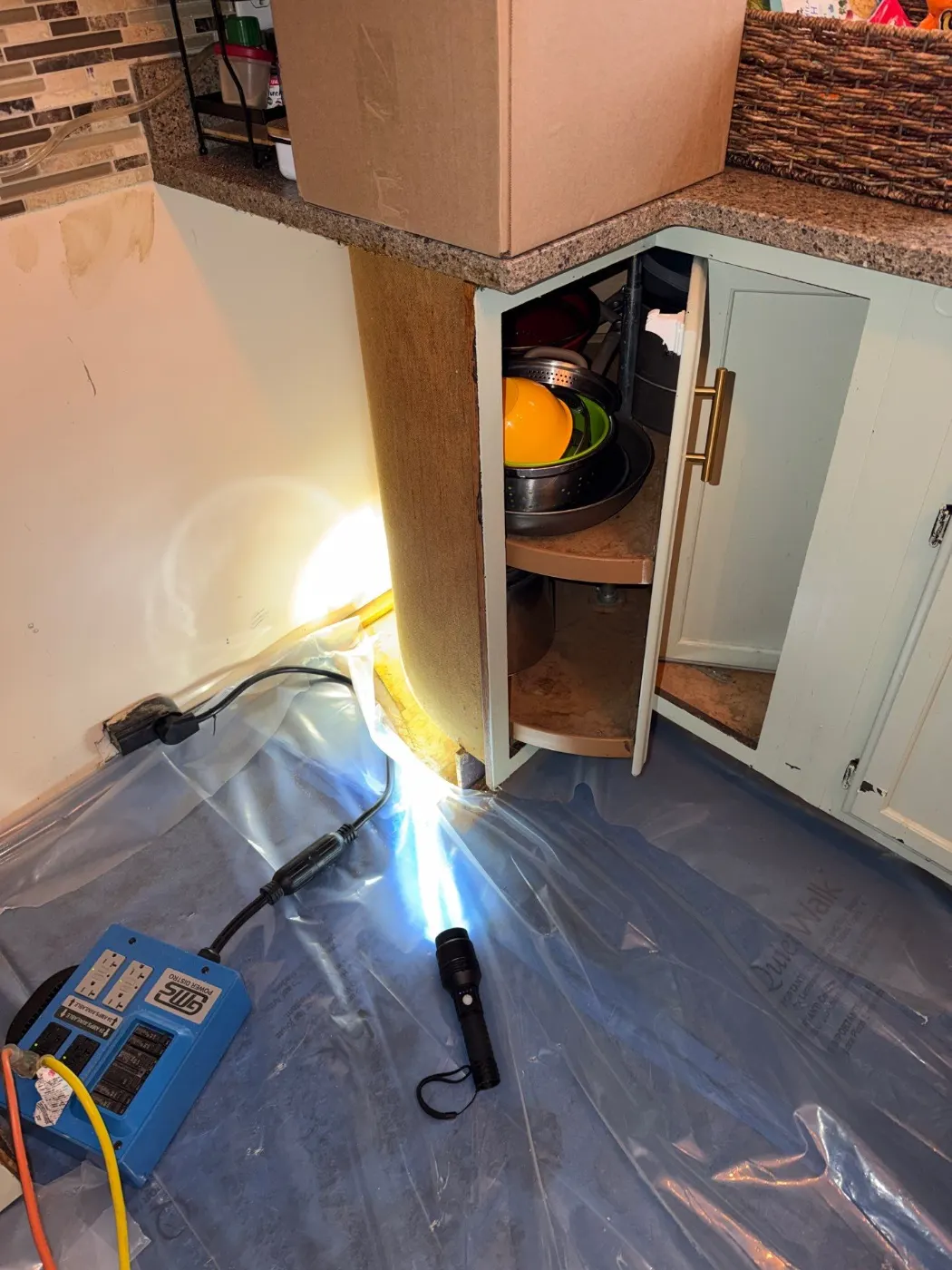
Check the back corner of the cabinet, not the front. Water runs to the low side and hides at the wall, so the stain sits well behind whatever you have stored in there.
Sump Pump Failure
Wood Wind Landing’s spring rains overwhelm sump pumps that haven’t been tested. We see this constantly: storm hits, pump fails, basement floods. Testing your sump pump twice a year prevents most of these emergencies.
Vacant Property Freeze
If a Wood Wind Landing property is going to sit empty through winter, shut the water off at the main and drain the system, or keep the heat on and have somebody check it weekly. A remote temperature alarm costs very little next to what we usually get called for.
Roof Leak Reaching the Ceiling
A ceiling that bulges is holding water above it, and standing under it to poke a hole is how people get hurt. We relieve it in a controlled way, extract what comes down, and pull the soaked insulation, because insulation that has been saturated does not dry in place.
What to Do Right Away When Your Wood Wind Landing Home Takes On Water
Your first job is to stop more water from coming in, and your second is to keep everyone safe from what's already there. After that, a few small moves protect your floors and furniture until our crew gets to your Wood Wind Landing home.
1. Close the main valve first
Find the main shutoff and close it all the way. A round handle turns clockwise, and a lever handle turns so it sits across the pipe. If the valve won't move, your water utility can usually shut off service at the meter.
2. Turn off power to wet rooms
Switch off the breakers for wet rooms only when you're standing somewhere dry and the panel is dry too. When the panel sits in a flooded basement, leave it alone and call your electric utility from upstairs.
3. Keep everyone on dry ground
Set up a spot in a dry part of the house for kids and pets while you work through this list. Floodwater and sewage both carry germs, and wet stairs and floors are easy to slip on.
4. Move what you can't replace
Carry keepsakes and important papers to a dry room upstairs. Then pick up anything sitting on a wet floor, starting with cardboard boxes and anything made of paper, since those soak up water quickly.
5. Lift furniture off wet carpet
Slide aluminum foil or plastic lids under the legs of wood furniture so stains don't bleed into the carpet. Pull up throw rugs and hang them somewhere dry, since they hold water against the floor underneath.
6. Our crew takes the photos
Our crew takes the damage photos when we arrive, so you can spend the first hour on the steps on this list. We photograph each wet room before anything moves, and those pictures go into the photo report you keep.
7. Let the air reach wet spots
In rooms with clean water, open closet and cabinet doors so air reaches the wet spots. On a hot, sticky day, keep the windows closed and leave the air conditioning on, since it pulls moisture out of the air.
8. Make the call early
Waiting until morning gives the water all night to soak into floors and walls. Our line is open 24/7, so call once the water is shut off and everyone is safe.
The crew takes over from here, starting with photos and moisture readings, so call when you've done what you safely can.
Three Simple Steps
Every job starts with a phone call and ends with readings that show the house is dry.
The Response
The damage footprint grows by the hour until extraction begins. The emergency line is staffed, not forwarded, and crews dispatch within 2 hours.
Category and Scope
Missing moisture on day one is the expensive mistake. We keep the claim moving by answering adjuster questions the same day.
Restore, Verify, Close
Standing water removed, cavities dried, contaminated material handled per Category. Verification closes the job, not the calendar, and most Wood Wind Landing dry-outs run 3 to 5 days.
What Our Water Damage Photo Report Covers for Wood Wind Landing Homes
Our photo report gives you a clear picture of the water damage in your home, taken by our crew and explained by us. It covers where the water came from and what we plan to do about it, and you keep it when the job is done.
The starting point
Every report opens with the starting point of the leak, photographed before anything is moved. Water that came from outside, like a window well or a storm, gets noted the same way, with photos of where it got in.
What a thermal camera shows
A thermal camera picks up the cooler surfaces that wet materials leave behind. When the crew uses one, the images go in the report next to the meter readings that confirm what the camera found.
Your belongings, documented
Damaged contents get photographed where they were found, along with the rooms around them. If something can't be saved, the photo report shows its condition so you have a record of it.
The plan for each room
Each room gets a short plan in the report, covering the equipment going in and anything that needs to come out. If the plan changes as the drying goes, the report changes with it.
Daily readings while it dries
While the equipment runs, the crew comes back to take new readings, and those go into the report too. You can follow the numbers as they drop and see which rooms are closest to finished.
Seeing it for yourself
The point of the report is that you can see the damage for yourself. We show you the same photos and readings the crew used, and you can ask about any of them before the work goes further.
A record that's yours
Keep the report with your home records. We document damage with a photo report and walk you through what we found, so you can decide with your insurance company. Your policy will say what's covered, so read it before you call them.
Call our dispatch line, and the crew will begin your photo report as soon as they reach your Wood Wind Landing home.
Questions to Ask a Water Damage Company in Wood Wind Landing
Ask any restoration company in Wood Wind Landing these questions before you sign a work authorization.
Who handles repairs after drying?
Ask who replaces drywall, flooring, paint and trim once the structure is dry, and whether one company can do both stages.
Who will be working in my home?
Ask whether the crew works for the company you called or for a subcontractor, and who's in charge on site each day.
How will you show me it's dry?
Ask for moisture readings on the first visit and the last one, so you can see the numbers reach dry standard.
Can I see an itemized estimate?
Ask for every line item in writing. Many insurers price water losses in Xactimate, so an estimate in that format is easier for an adjuster to review.
Does my policy require a certain company?
Ask your adjuster before you sign anything, and read the work authorization so you know what you're agreeing to.
What happens if you find mold?
Ask how mold behind walls or under floors gets handled, and whether that work is priced apart from the drying.
Indiana Weather Drives Restoration Calls Year Round
Indiana weather drives the bulk of water damage calls we run in Wood Wind Landing. Spring saturation overwhelms sump pumps in finished basements, summer thunderstorms push water through foundations and compromised envelopes, and winter freeze thaw cycles burst supply lines during overnight cold snaps, often while the household sleeps.
Severe Thunderstorms
Central Indiana storms regularly drop heavy rain in short windows, and Hamilton County has been under severe weather warnings dozens of times in the past year. Saturated ground pushes water through foundation walls and overwhelms sump pumps, particularly in finished basements. When called to Wood Wind Landing after a storm, we extract standing water first, then dry the structure before drywall and insulation absorb the loss.
Winter Pipe Bursts
Indiana freeze thaw cycles burst supply lines in unconditioned spaces, and power outages during winter storms turn a slow drip into a full release once the home refreezes. The worst calls come overnight, when water runs for hours before anyone notices. We dispatch fast to Wood Wind Landing, stop the spread, and start extraction before sheetrock and flooring are unsalvageable.
Spring Saturation Flooding
By March and April, Hamilton County soils are saturated, and sump pumps in Wood Wind Landing run constantly. A backup battery failure or a pump that cannot keep up during a heavy rain event puts inches of water on a finished basement floor within hours. We extract, dry, and address any drywall or flooring that wicked moisture above the waterline.
Storm-Driven Roof Intrusion
Hail and high winds during severe storms can compromise roof envelopes and drive water into attics, ceilings, and wall cavities. The damage often does not surface until staining appears days later. When water has penetrated a Wood Wind Landing home from above, we map the moisture path with thermal imaging, dry the affected assemblies, and rebuild the ceiling and wall finishes.
Local Wood Wind Landing Streets, Local Experience
The Wood Wind Landing neighborhoods we cover, with notes on the homes in each one and where water usually gets in.
Where we respond near Wood Wind Landing
Our crews cover Wood Wind Landing and the closest towns around it, any day of the week.
What Water Damage Looks Like in Wood Wind Landing
What our crew looks for in Wood Wind Landing homes.
About Wood Wind Landing Homes
Wood Wind Landing is an entirely new construction community that broke ground in October 2025, with all homes being built in the 2025,2027+ era as custom and semi custom single family residences. Homes built in this period are constructed with modern PEX plumbing systems, high efficiency mechanical systems, and current Indiana building codes, meaning galvanized and copper supply lines are not a factor here. The community features approximately 186 custom and semi custom single family homes spread across three sections (Area A: 15,000 sq. ft. lots; Area B: 9,000 sq. ft. lots; Area C: 12,000 sq. ft. lots), with premium architectural designs built along rolling fairway terrain and near tranquil water features integrated into the golf course layout. As high end new construction in Hamilton County, these homes are expected to include finished basements standard to the luxury market, with sump pump systems required given Westfield's regional water intrusion patterns.
Where We Work in Wood Wind Landing
We cover homeowners across Wood Wind Landing near Wood Wind Golf Club (municipal golf course at community center), Grand Park Sports Campus, Westfield Washington Public Library (333 West Hoover Street), US-31 corridor, Ditch Road, 161st Street, 166th Street, Park Street Restaurant District.
Surrounding Areas We Serve
Our crew also covers Carmel, Noblesville, Fishers, Zionsville, Cicero, Sheridan.
Recent Weather Patterns
Hamilton County, including Westfield, is situated in a region of Central Indiana with documented severe weather exposure: the Westfield area experienced approximately 2,000 power outages during a significant April 2 storm system that produced at least five confirmed tornadoes across the Indianapolis metro area, with Hamilton County among the affected counties. The Westfield, IN area has been placed under severe weather warnings 44 times in the past 12 months and has had Doppler detected hail on 79 recorded occasions, creating recurring conditions for storm driven water intrusion, sump pump overload during heavy rainfall events, and freeze thaw burst pipe exposure during winter months.
What Our Crew Sees in Wood Wind Landing
Westfield is one of Indiana's fastest growing cities, and restoration dispatch to Wood Wind Landing involves entirely new construction homes (2025 era and newer) where the primary water damage risk patterns involve sump pump failure during the region's frequent heavy rain and severe storm events, construction phase plumbing vulnerabilities, and landscape related drainage challenges on a site the developer described as 'fairly flat' farmland prior to development. The community's proximity to integrated water features and three golf course fairways means grading and subsurface drainage patterns around homesites warrant close attention for groundwater intrusion and foundation seepage. Westfield's freeze thaw cycle through Indiana winters creates burst pipe exposure in homes during power outages,a documented risk given that approximately 2,000 Westfield area customers lost power during a single April 2025 storm event,making sump pump battery backup and interior pipe protection critical vulnerabilities in this housing stock.
The Wood Wind Landing Area
Westfield has a population of approximately 54,677,62,994 residents (estimates vary by source/year) with a 2024 median household income of $122,789, well above state and national averages, making it one of Hamilton County's most affluent communities. The city skews toward younger families, with a median age of approximately 37 and about 41.7% of households having children under 18; Wood Wind Landing's luxury price points ($680,000,$790,000+) put its homeowners in the upper income tier of an already high income suburb.
The Three Phases of a Water Loss in Wood Wind Landing
What we bring, what we seal off, and what we put back.
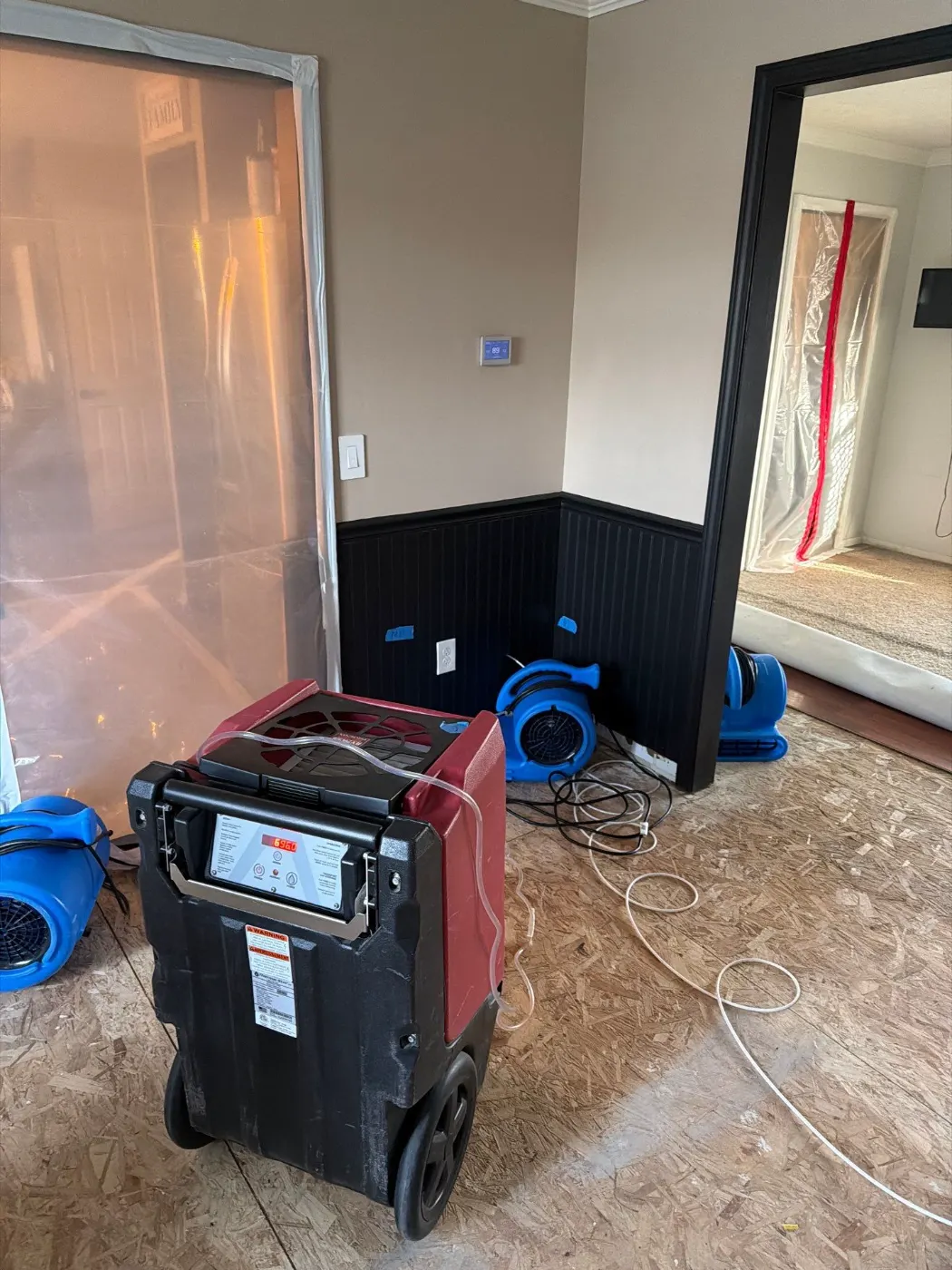
Emergency response starts the moment the crew arrives in Wood Wind Landing. The truck carries commercial water extraction equipment, commercial dehumidifiers sized to the affected square footage, professional air movers, moisture meters, and thermal imaging. Extraction begins promptly on site, and structural drying setup follows the same day, with daily monitoring and logged readings until materials hit dry standard. Work zones are contained with plastic, unaffected areas are protected, and we walk you through what to expect day by day so the household can plan around the equipment. This is the standard playbook for Category 1 and Category 2 losses, the clean and gray water jobs that make up most residential calls. The goal is to dry the structure in place wherever possible, because saved materials mean less reconstruction and a faster move back in.
Specialized containment applies when the water is Category 3 (sewage backup, floodwater, long stagnant water with biological growth) or when full mold remediation per IICRC S520 is required. Containment is built with 6-mil plastic barriers floor to ceiling, entry points are sealed, and negative air machines pull the contained air through HEPA filtration before exhausting outside the work zone. Technicians work in full PPE, Tyvek suits, N95 or P100 respirators per S520, nitrile gloves, and eye protection. Contaminated materials are cut and bagged for disposal, antimicrobial is applied to remaining structure, and post remediation verification with air sampling is performed when warranted. This is the phase where IICRC certification matters most. Corner cutting on a Category 3 or mold job is what causes the long term respiratory and indoor air quality problems homeowners deal with years later.
Reconstruction is where most restoration jobs stall, because the typical industry model hands the rebuild to a separate general contractor after drying. That creates two crews, two schedules, two billing cycles, and a home sitting in demolition while the second contractor works the calendar. Our reconstruction scope covers drywall hung, taped, mudded, sanded, primed, and painted; flooring replaced (carpet and pad, vinyl plank, hardwood refinish, tile reset); trim and baseboards reinstalled or replaced; cabinetry repaired or replaced; doors rehung; and electrical and plumbing finish work coordinated with the appropriate trades. One project number runs from the initial call through the final walk through, one project manager is your point of contact, one schedule, one final invoice. The finish has to match what was there before the loss, particularly in Wood Wind Landing where the build quality sets the bar.
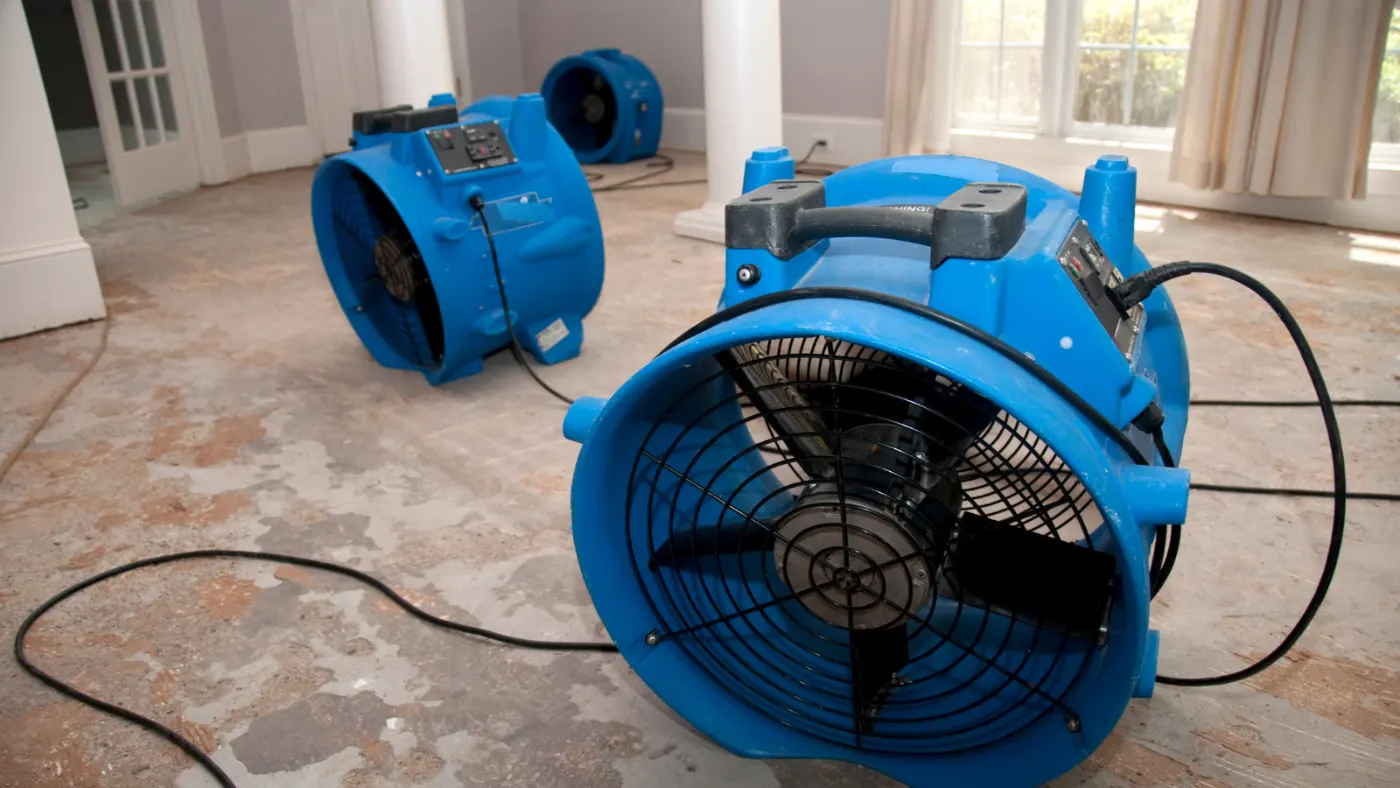
What the Drying Days Look Like in Your Wood Wind Landing Home
You can usually keep living at home during a dry out. The equipment is loud and it runs day and night, but the crew sets it up so you can still use the rest of the house while the wet rooms dry.
The equipment runs around the clock
Air movers and dehumidifiers run day and night, and they make a steady hum you'll hear through the house. The sound means air is moving across the wet surfaces, which is how the moisture gets pulled out.
Leave the settings to the crew
Most units have their own switch or a small control panel. The crew sets those for your rooms, so leave them as they are and let the crew make changes on their next visit.
Keep the room set up the same way
The crew will tell you which doors to keep closed and where to set the thermostat. Drying works by controlling the air in the room, so keeping it the way it was set up keeps the drying on schedule.
Keep cords clear
Cords run along the floor between the outlets and the equipment. Leave them where the crew routed them, and keep rugs and furniture off the cords so they stay cool and easy to see.
Pets and drying rooms
Pets tend to be curious about the noise and the warm air, so keep them out of the drying rooms when you can. A gate across the doorway works if a door has to stay open.
Let the crew in each day
The daily check takes a short while, and it decides when the equipment can come out. Plan for someone to be home, or work out a time with the crew so they can get to the wet rooms.
Humidity after the job
CDC recommends keeping indoor humidity as low as you can, no higher than 50 percent all day long. After the equipment leaves, a basement dehumidifier and a working bathroom fan help keep it there.
When the equipment comes out
The equipment comes out when the readings show the materials are dry, and the crew shows you those readings before they pack up. If anything needs repair, that work gets scheduled once the drying is finished.
Once the house is dry, the photo report and the final readings are yours to keep with your home records.
Sources: CDC, About Mold
Water damage pricing in Wood Wind Landing
Mitigation ranges calibrated to the Wood Wind Landing market. Final pricing depends on water volume, materials affected, and IICRC Category.
What Wood Wind Landing Homeowners Want to Know
What Wood Wind Landing homeowners usually want to know on the first call, with plain answers.
Expert Wood Wind Landing Restoration Crews Available Now
Water spreading through your home in Wood Wind Landing right now, suspected hidden moisture, or standing water after a storm, call for fast emergency dispatch and we roll with extraction equipment loaded. Free on site inspection, no obligation, and we coordinate with your insurance carrier from day one.