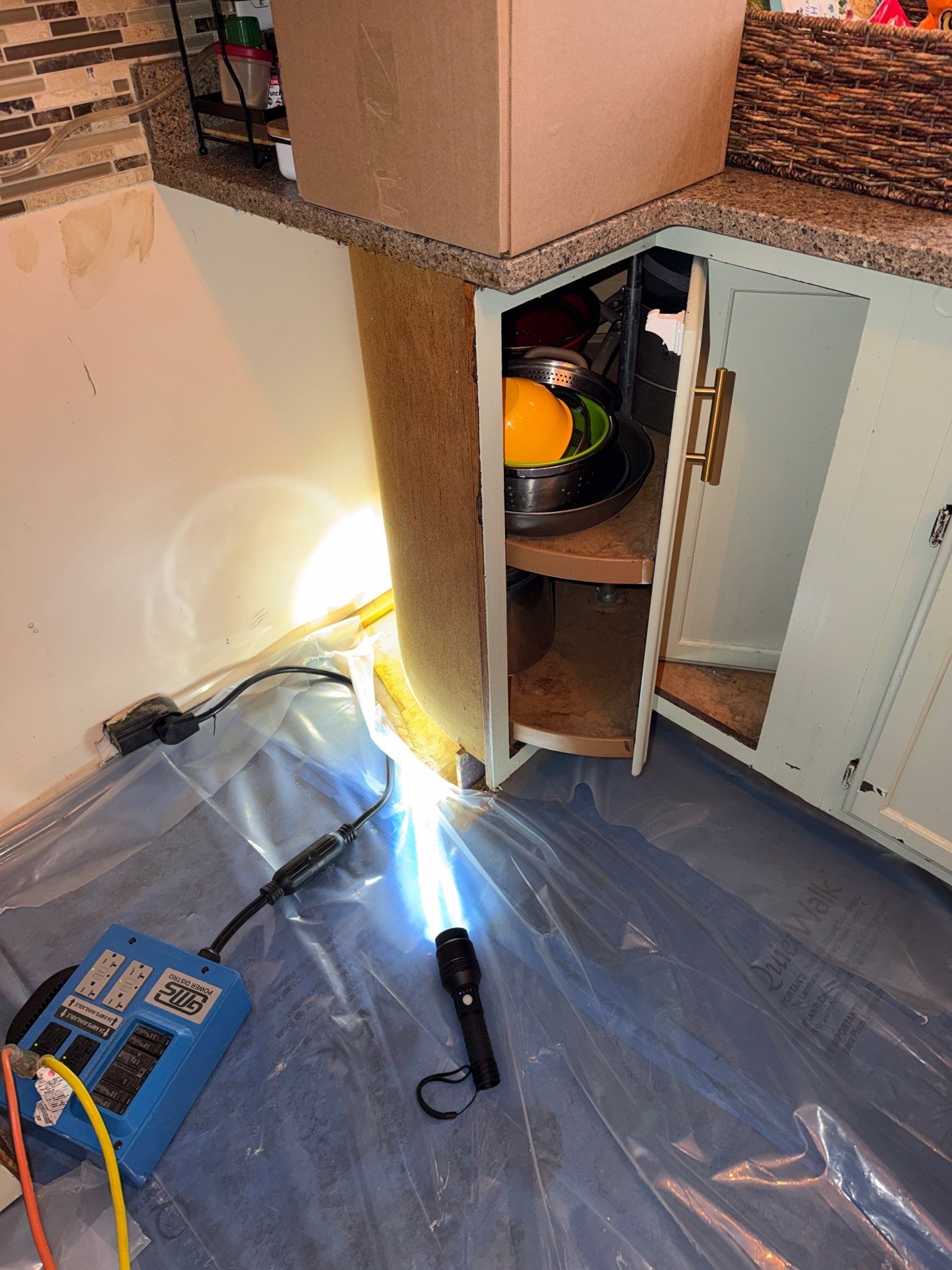
Problem: The Tank Is Still Leaking and Water Keeps Spreading
Until the supply is shut off, every minute adds gallons to the floor. A slow seep at the base can become a full tank dump if the corrosion gives way, and a pressure relief valve failure can spray hot water across the room. In a typical Wood Wind Landing utility closet, water reaches the hallway carpet in under 10 minutes.
Solution: Two Shutoffs and a Drain
You have two valves to know. The cold water supply valve sits on top of the tank, usually a lever or a round handle. Turn it fully clockwise. Then kill the power: flip the dedicated breaker for an electric unit, or rotate the gas dial to the off position for a gas unit. If the leak is severe, attach a garden hose to the drain valve at the bottom of the tank and run it to a floor drain or outside. This drops the pressure and slows the flood. If you cannot find the shutoffs, call us and we can talk you through it while we dispatch a truck. Wood Wind Landing Water Restoration keeps emergency lines staffed around the clock, and our average response time in Wood Wind Landing is 45 to 90 minutes from your first call.
Problem: Standing Water Is Sitting on Floors, Subfloor, and Baseboards
Even a small leak of 5 to 10 gallons soaks into porous materials fast. Carpet pad acts like a sponge, particleboard subfloor swells within hours, and baseboards wick moisture vertically into drywall. By the time the floor looks dry on top, the materials underneath can still be at 25 to 40 percent moisture content, which is well above the safe threshold of 16 percent for wood.
Solution: Professional Extraction and Moisture Mapping
This is where DIY shop vacs fall short. Our crews use truck-mounted or portable extractors that pull water out of carpet pad and from under cabinets, then we use thermal imaging and pin meters to map the actual moisture footprint. You will see exactly where the water traveled, which is often two to three times farther than the visible wet area. For a deeper look at how this process works, our water extraction services overview breaks down the equipment and timelines we use on these jobs.
Problem: The Leak Reached the Basement or a Lower Level
Many Wood Wind Landing homes have the water heater on the main floor or in an upstairs closet, which means a leak can run down through ceilings, light fixtures, and HVAC chases before you ever see it. Other homes keep the unit in a finished basement, where the leak meets stored belongings, drywall, and flooring all at once.
Solution: Contain, Document, and Dry From the Bottom Up
We isolate the affected rooms with containment plastic, pull baseboards and drill weep holes where needed, and set air movers and dehumidifiers sized to the cubic footage. A standard basement leak in Wood Wind Landing usually needs 3 to 6 air movers and one or two LGR dehumidifiers running 3 to 5 days. If your basement is the primary impact zone, the flooded basement cleanup guide covers the drying sequence in more detail.
Problem: The Same Thing Could Happen Again Next Year
Most residential water heaters last 8 to 12 years, and many failures happen with little warning. If your tank is past the 10-year mark, rust on the fittings, popping sounds during heating, or rusty hot water are early signals worth taking seriously.
Solution: Simple Prevention Steps After Cleanup
Once your space is dry, take three steps to reduce the odds of a repeat. Install a drip pan with a drain line if your unit does not have one. Add a basic leak sensor at the base of the tank, since models under 30 dollars will text your phone the moment water is detected. Flush the tank annually to clear sediment that accelerates corrosion. These small habits often add years to a tank and keep you off our emergency board next winter.
Problem: Mold Could Start Growing Before the Walls Look Dry
Mold needs moisture, a food source, and 24 to 48 hours. Drywall, wood, and carpet pad provide all three. A water heater leak that sits overnight, especially in a warm utility space, creates ideal conditions.
Solution: Aggressive Drying and Targeted Antimicrobial
We dry to IICRC S500 standards, which means we do not stop until moisture content matches unaffected baseline readings in the same materials. Antimicrobial is applied to affected porous surfaces, and we monitor daily until the structure is verified dry. You get a final moisture log so there is no guessing whether the job is complete.
Problem: You Have No Idea What This Will Cost or Who Pays
Cost anxiety is real, especially when you do not know if insurance will cover the damage. Most homeowner policies cover sudden and accidental water heater failure, but they will not cover the cost to replace the tank itself, and they will not cover damage from a leak that has been seeping for months.
Solution: Realistic Pricing and Honest Claim Guidance
Here is what Wood Wind Landing homeowners typically see for water heater leak cleanup:
- Minor leak, contained to one room, under 100 square feet: 750 to 2,200 dollars for extraction, drying, and monitoring.
- Moderate leak crossing into hallways, multiple rooms, or affecting subfloor: 2,500 to 6,500 dollars including selective demo and antimicrobial treatment.
- Major leak with finished basement impact, ceiling damage below, or Category 2 water exposure over 48 hours: 6,500 to 18,000 dollars or more with full reconstruction.
We document everything with photos, moisture readings, and line-item invoices that match what adjusters expect. If you want a deeper breakdown of how pricing is built, our water damage restoration cost guide walks through every line item. When you call your insurer, ask three specific questions: what is the deductible on this peril, does my policy include hidden seepage coverage, and will you assign a preferred vendor or can I choose my own. In Wood Wind Landing, you always have the right to pick your restoration contractor, and Wood Wind Landing Water Restoration bills the carrier directly on approved claims.